The last decade has seen a rapid rise in attention toward the global status of insects. Insects comprise the majority of terrestrial biodiversity and are instrumental components in nearly all ecosystems, from pollinators and decomposers to food for other trophic levels.


We know very little about many insect groups, but we know a great deal about butterflies. They have long been of interest to naturalists and have been monitored worldwide for decades. My research pairs population-level data with genomic and experimental approaches to understand how butterflies are faring in a rapidly changing world.

Life history and long-term population dynamics


Insects are the exemplars of boom or bust population dynamics, where in some years, a particular species is nearly absent, but in other years, they dominate the landscape. Cycles like this complicate our understanding of responses to global change because, over short time spans, it is difficult to disentangle expected population oscillations from unexpected declines. My research pairs long-term datasets that span beyond typical population dynamics with experimental approaches to understand the trends in insect populations driven by Anthropogenic change. I use data from, but also contribute to, butterfly monitoring programs like the Shapiro transect, NABA butterfly counts, and PollardBase, and I feel strongly that the continued collection of datasets like these is essential for fully comprehending biodiversity loss.
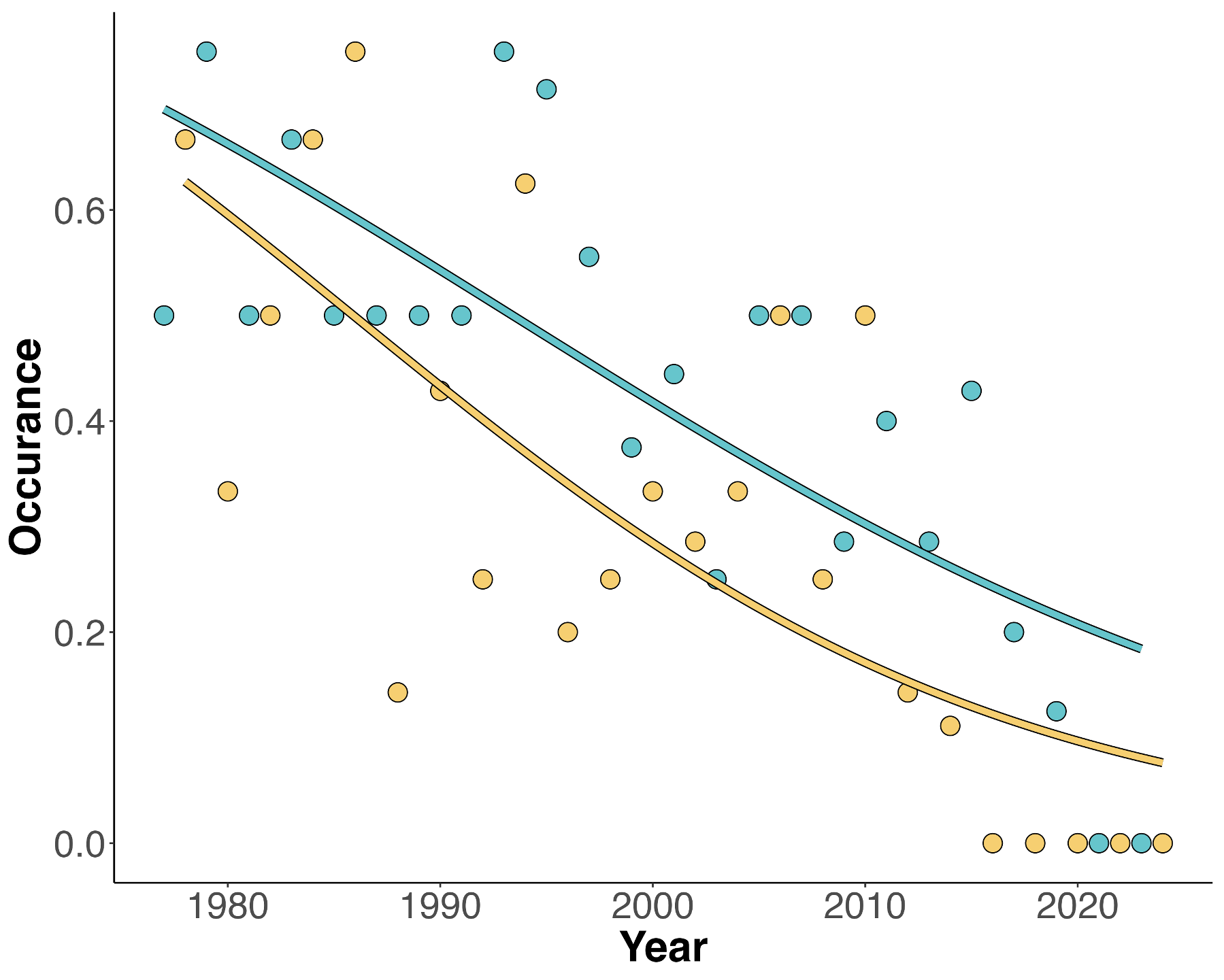
Time series of declining butterfly

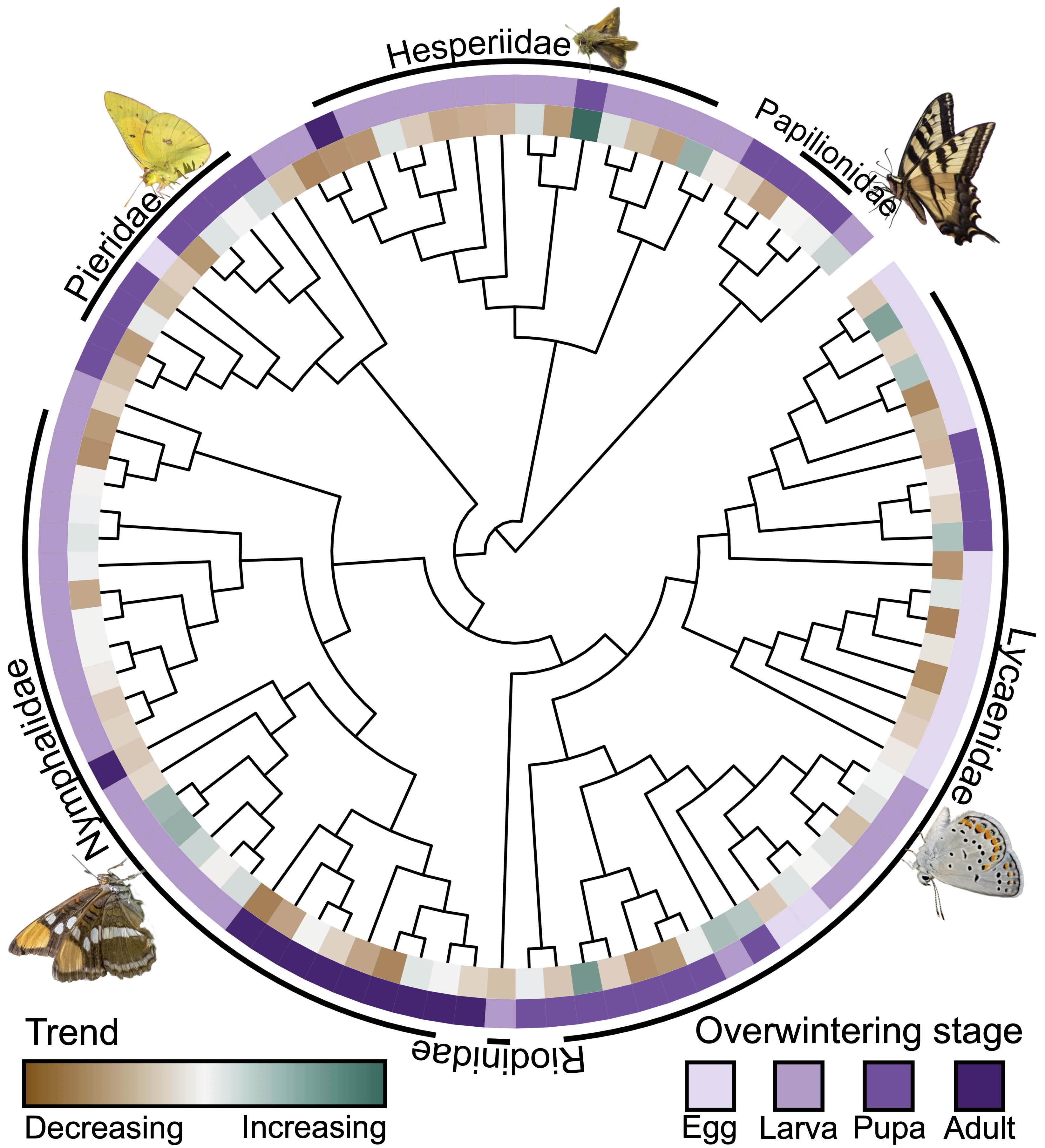
Pylogenetic tree of California montane butterflies

Cold-adapted species in a warming world


Temperature is increasing rapidly in the coldest environments, including those at higher elevations, higher latitudes, and during winter. Resident species have evolved to survive this cold, but how these traits mediate responses to contemporary warming remains poorly characterized. My research examines the life histories of insects in cold systems and uses a combination of experiments and genomics to gain insight into population-level patterns observed in these environments. I specifically focus on montane butterflies, an exemplar taxon for which we have detailed historical records and can be relatively easily studied. Results from this work have shown that butterflies that overwinter in more juvenile life stages are more susceptible to disruptions to snowpack.


Rapid evolution as a pathway to persistence


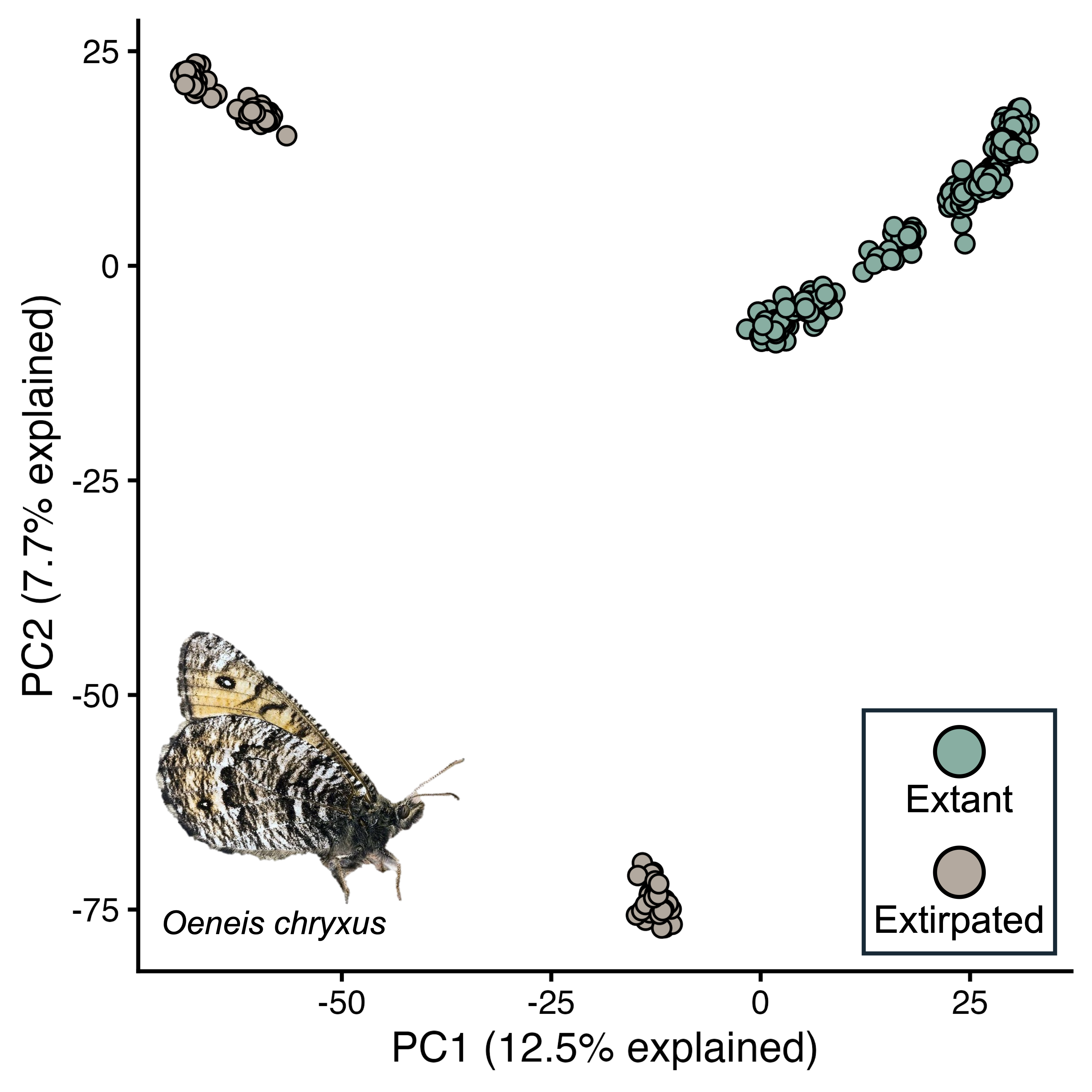
A classic prediction of global change biology is that mountaintop species should be among the most vulnerable to climate change. These environments are warming rapidly, yet species at the highest elevations have limited opportunities to track suitable conditions by moving upslope. For these populations, long-term persistence may therefore depend on their capacity to adapt to a rapidly changing environment. Rapid evolution is a well-documented response to environmental pressures in insects, but whether, and how quickly, such evolutionary responses can keep pace with climate change remains a critical question for understanding species persistence. My research addresses this question using alpine butterflies and historical collections, combining genomic approaches with long-term ecological data to forecast evolutionary resilience and predict how genotypic and phenotypic variation may change through time.

Photo 1